Case Study
The making of a museum
Telling the stories of over 200 individual jazz musicians and broadcasters who shaped the civil rights movement.
[Exhibit Designer & Project Manager, Illustrator, Content Development, Team Lead for Talented Designers, researchers and content developers.]
Harris-Stowe University was awarded $3 million in grants from the National Park Service for the preservation of HBCU Harris-Stowe University’s historical recreational center – a pre WW2 sports complex converted which would be converted into an 8,000 sq. ft. museum.
In addition to an educational center for broadcasting, this would be home to two historical significant museums: The Don & Heide Wolff Jazz Institute and the National Black Radio Hall of Fame. These combined museums explain how both jazz, and African American DJs, played a pivotal role in the civil rights movement.
While inspiring and creative, this project posed significant challenges:
- A tight budget which had to include the physical exhibit structures, graphic design, content development, and vinyl graphics.
- Significant content challenges: Few usable related artifacts, or reproducible visuals. Many photographs were photocopies. However, the team had access to album covers, and a library for research, and a fabulous subject matter expert.
- Vibrancy and the unexpceted was the vision. A desire for individual artists to appear individually inspired.
- Purchasing stock photos (generally from other museums) was costly and beyond the financial scope of the project.
- The graphics challenge: making jazz artists – some from 100 years ago – relatable to modern, younger audiences.
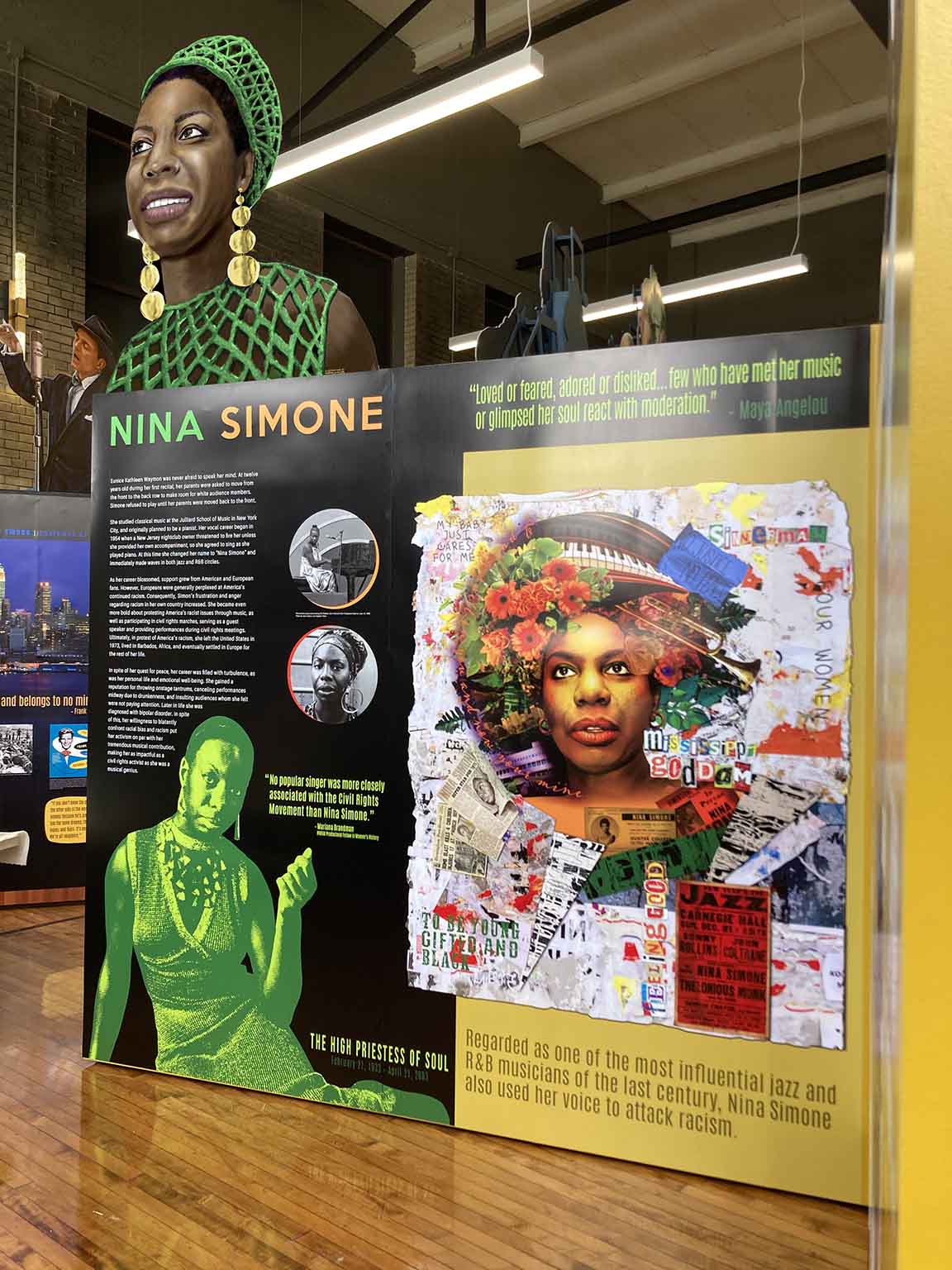
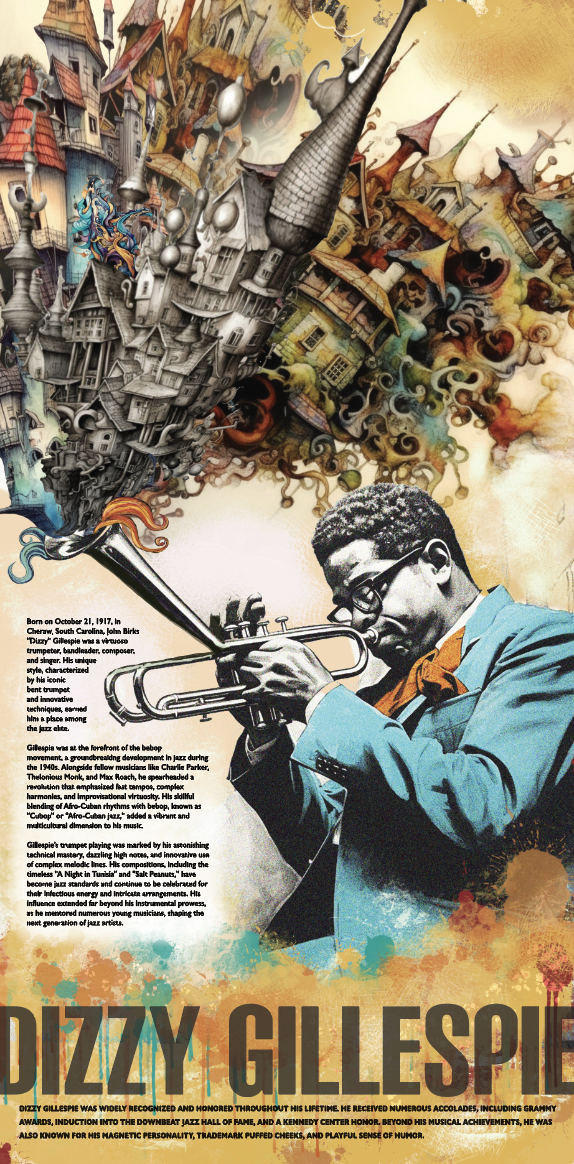

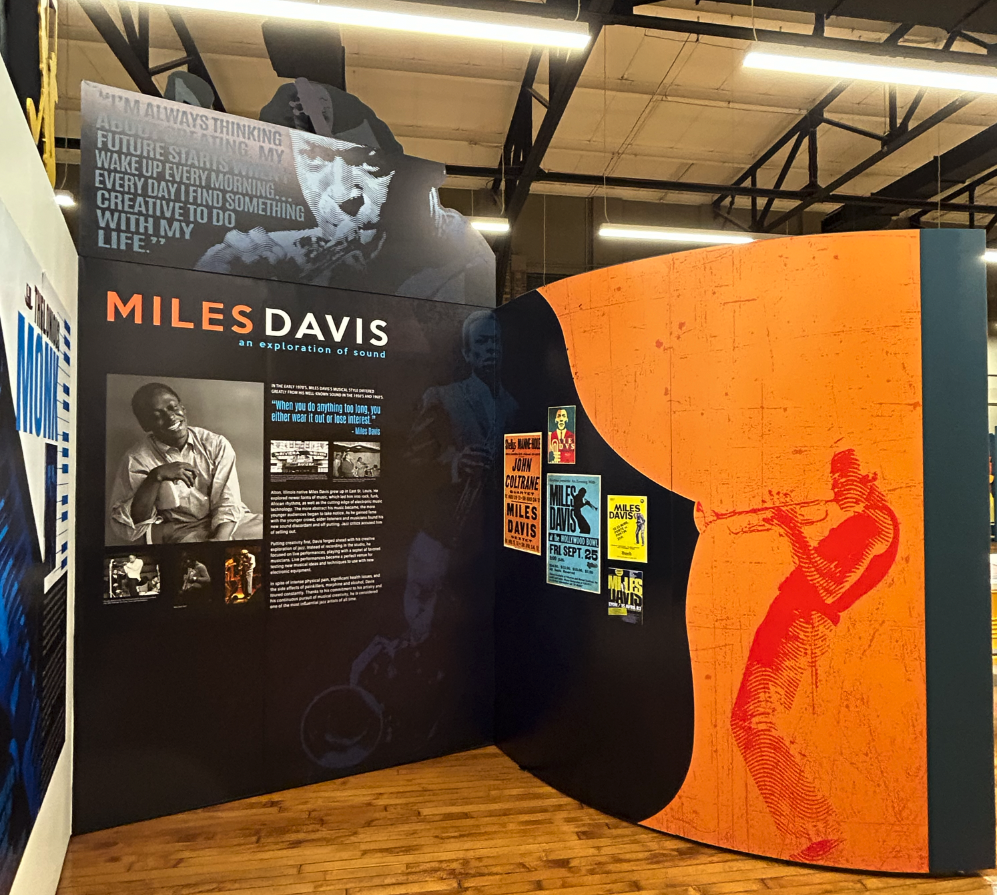
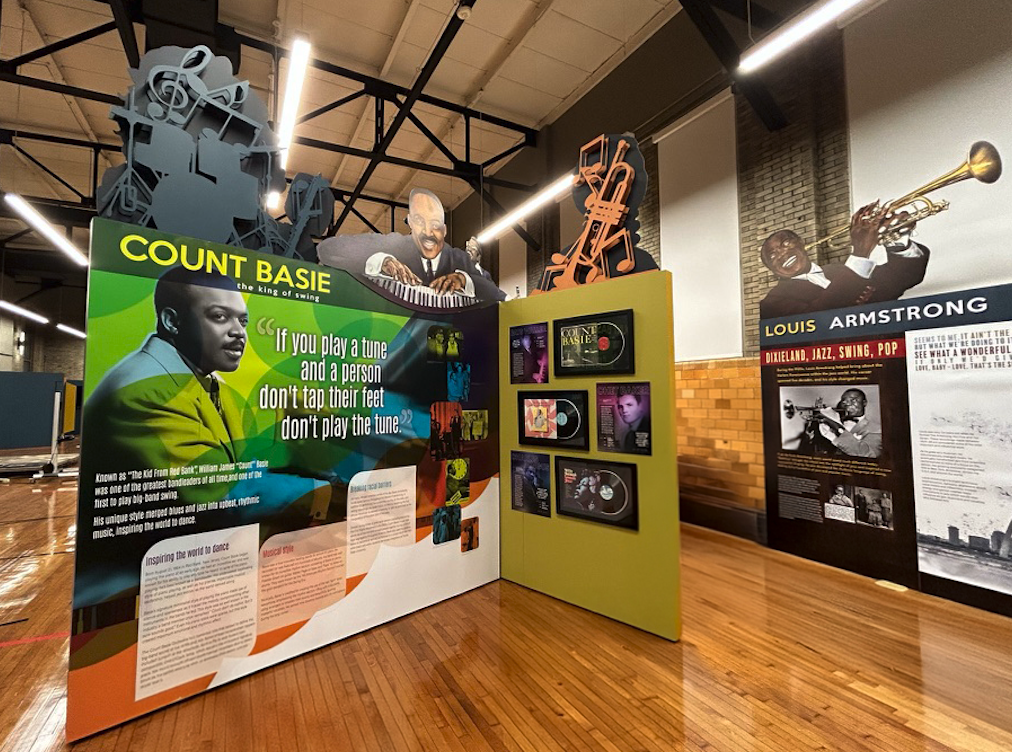
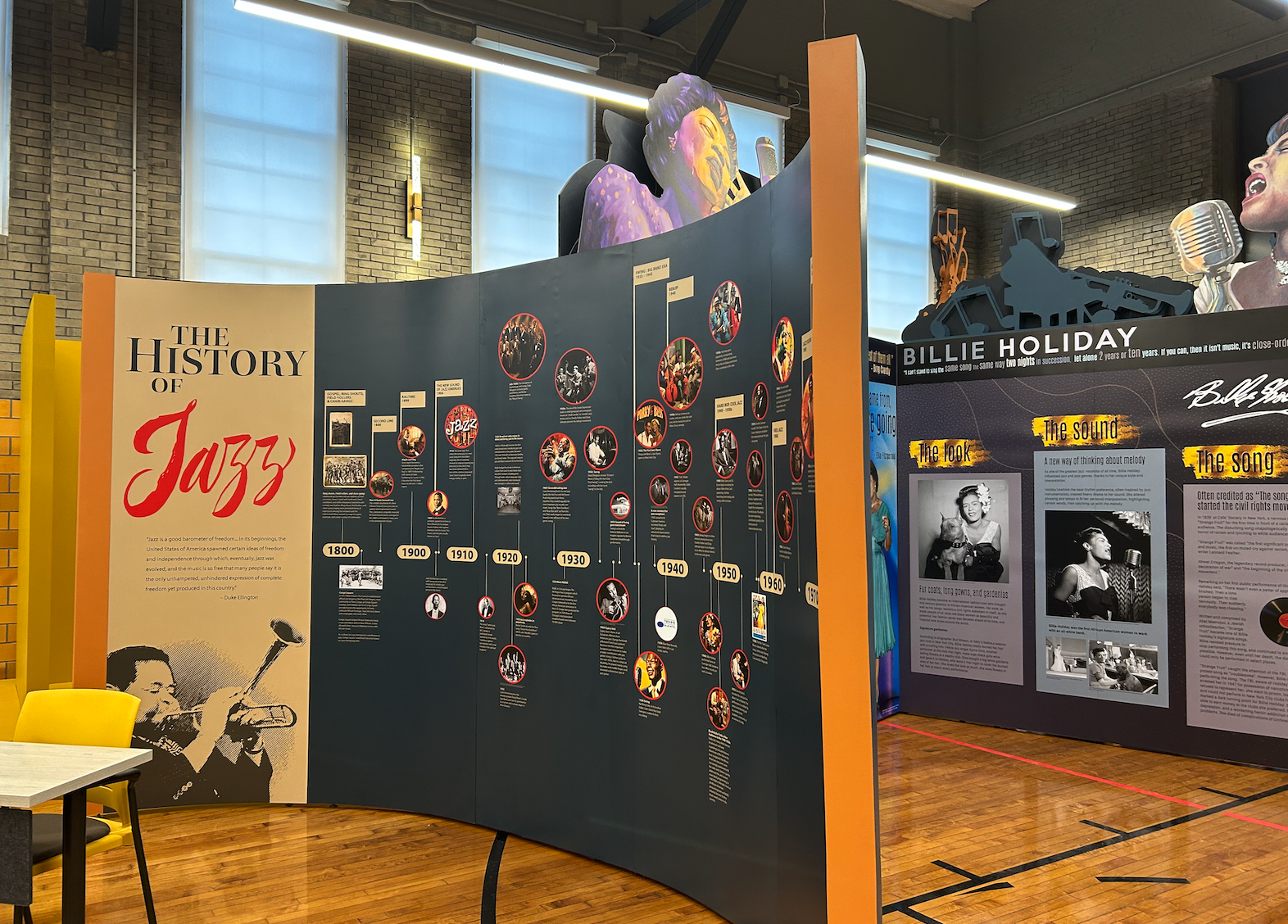
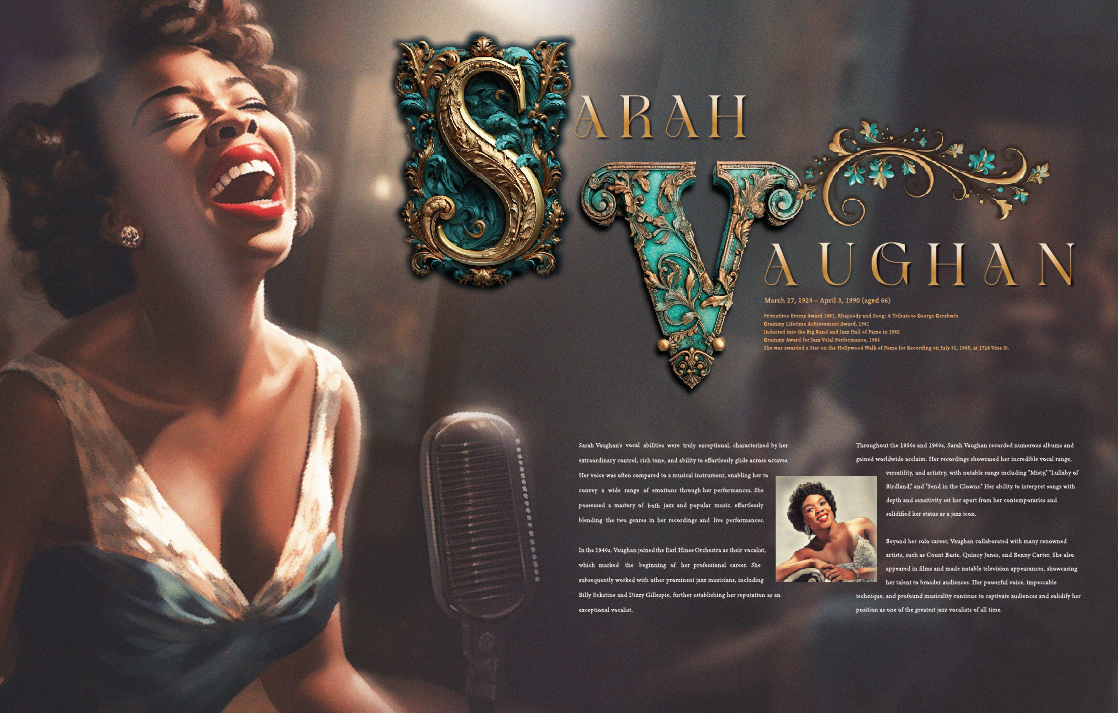
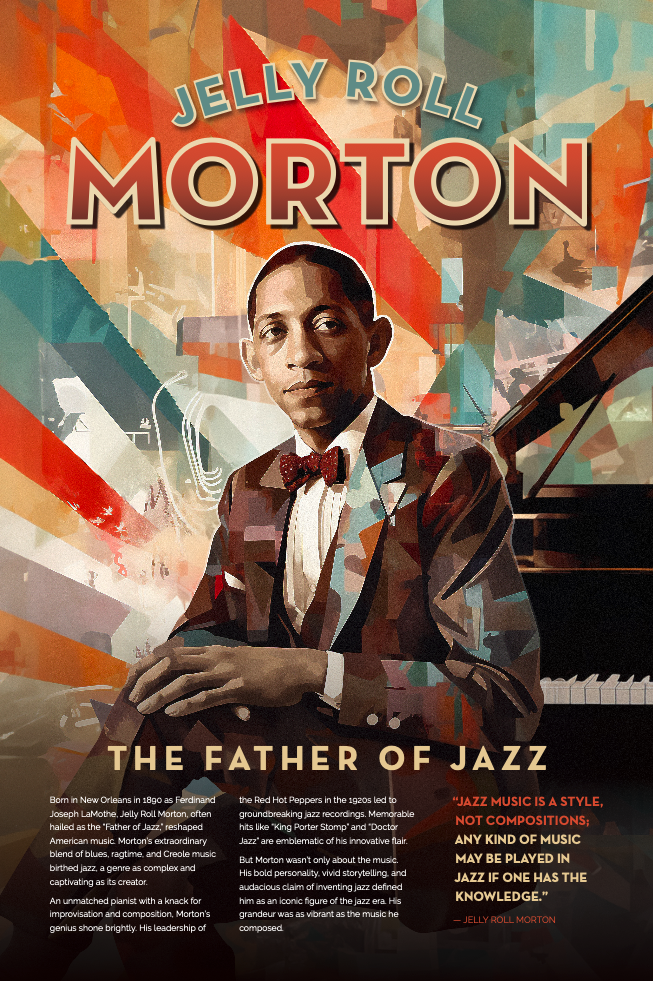
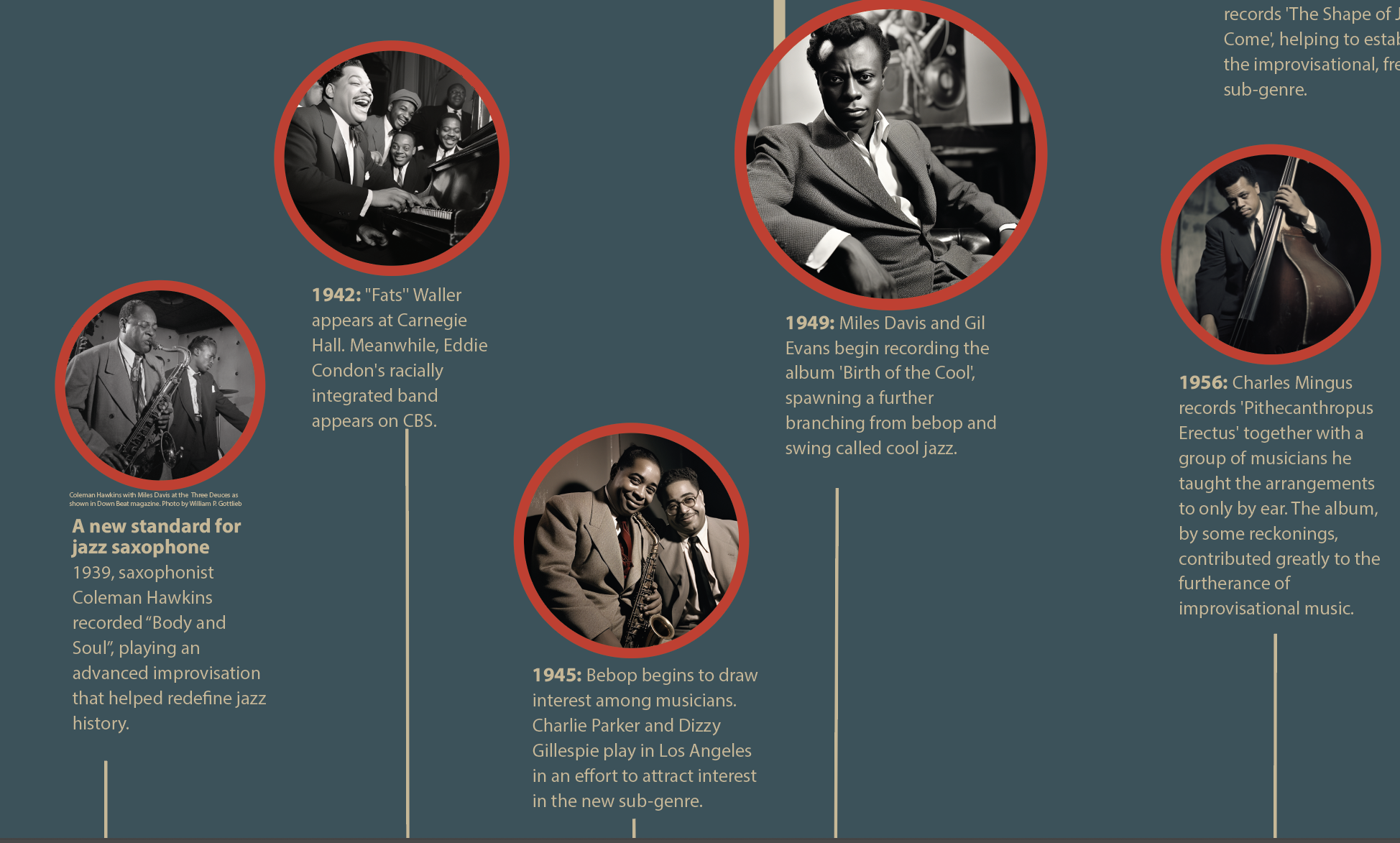
As with this History of Jazz timeline display above, AI images were generated to fill in where no images exhisted (see detail below). Used sparingly, AI images were only supplied for design effects, not to replace actual historical images.
So how did we solve those issues?
- Saved on physcial structures by going with Pareti’s high performance modular walls.
- Switched to Styrene, rather than use vinyl wrapping.
- Applied cost savings to graphic design and content development.
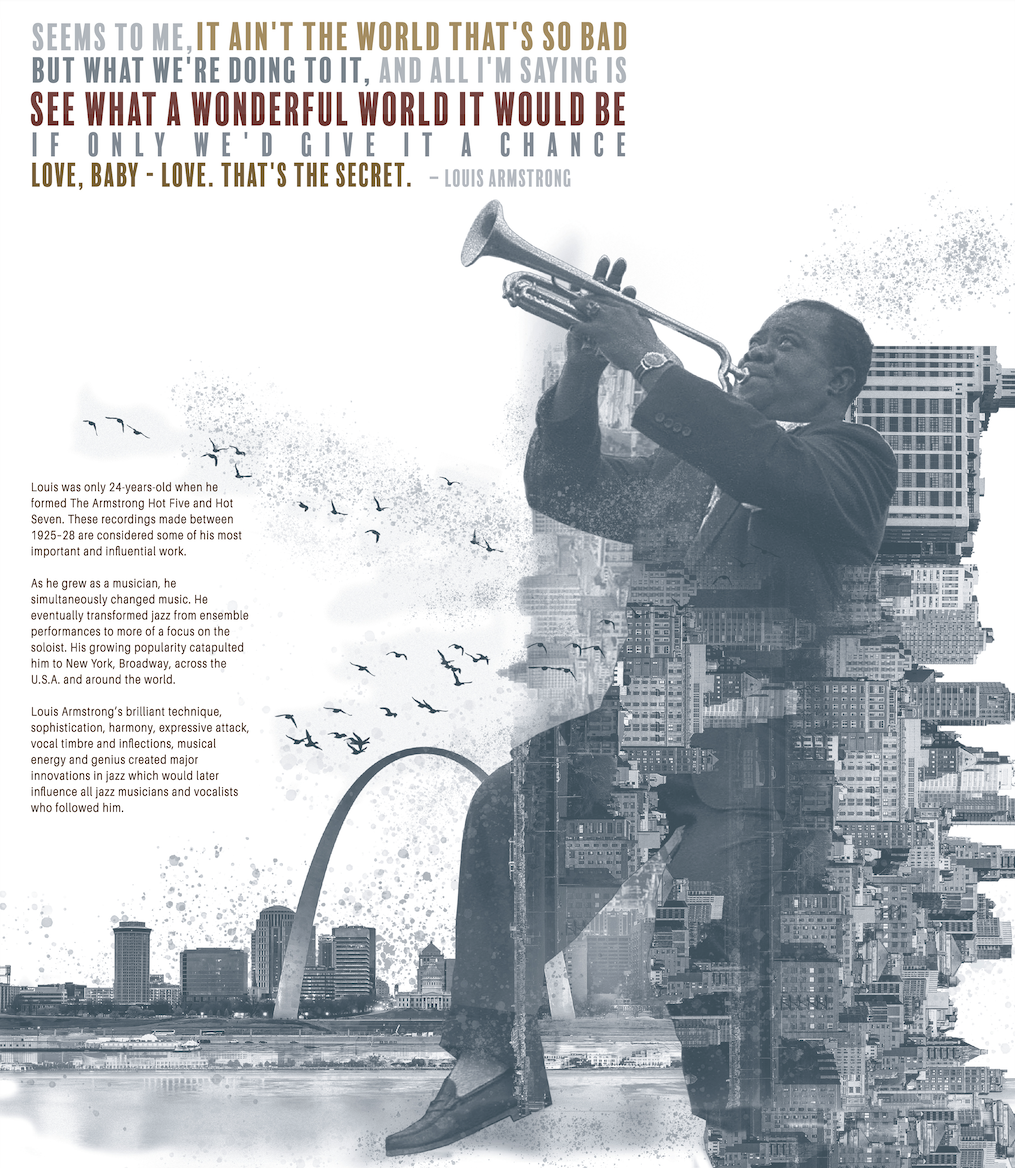
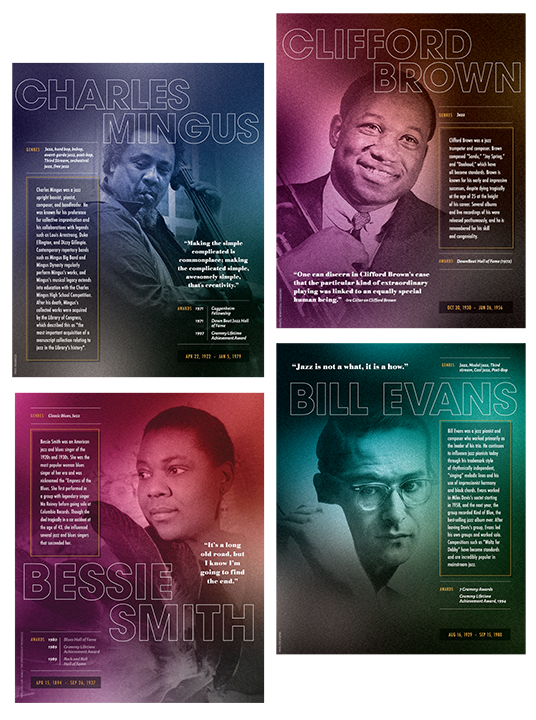
- Artists were categorized according to their influence on the Civil Rights Movement. For the primary 26 artists, each exhibit was to offer a visual interpretation of their music.
- Used public domain photos from the Library of Congress (thanks to the William P. Gottlieb Collection). Colorized and/or used AI (see below) to bring color to create visual interest or supplement when images were not available.
Deadlines were met on time and on budget